
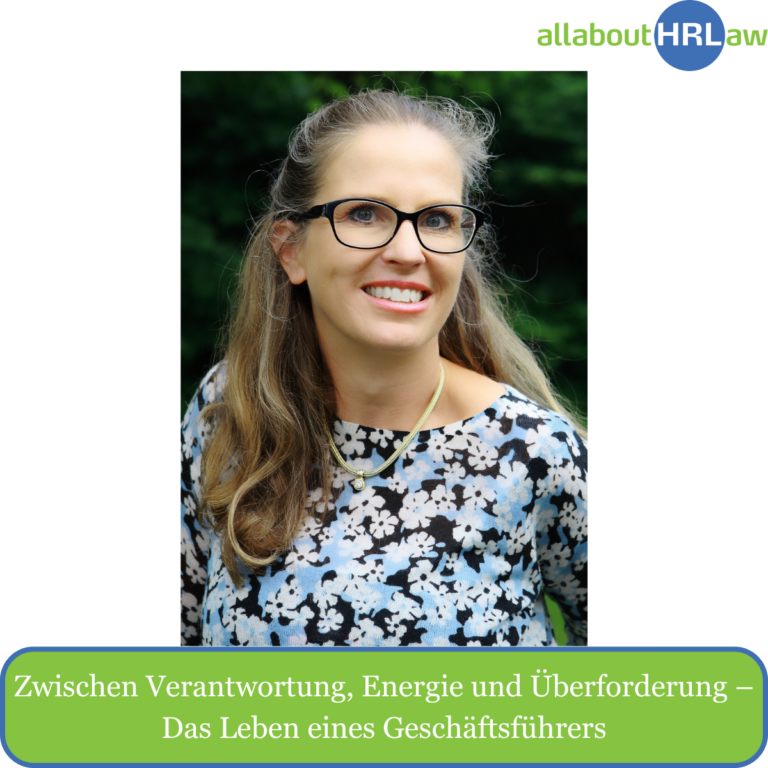
From the outside, the role of a managing director often seems clearly defined: making decisions, taking responsibility, and steering a company. On the inside, however, it is far less straightforward—and often closely tied to one’s own personality.
I have always been different. Too much energy, too many interests, too many things happening at the same time. While others focused on a single subject, operating in parallel was my natural state. Pursuing two degrees, managing different projects, constantly generating new ideas—not as part of a strategy, but simply because it felt completely natural to me.
Was it exhausting? To be honest, I still do not really understand that question. It was simply my normal state.
Later, I carried this pattern into the business world. Business moved at my pace, fueled by my energy and shaped by my way of thinking. A great deal was created as a result, and much of it grew successfully. Looking back, however, some things became overwhelming—especially for the people around me. I was told that interns and employees sometimes reached their limits because the pace and expectations were not always aligned.
For a long time, I believed this was the natural way forward: if it worked for me, it could work for others as well. Today, I see it differently. Not everyone can operate at the same speed, and not every structure can sustain the same level of intensity.
And this is exactly where a transformation is currently taking place.
We are scaling. And scaling does not only mean growth on the outside—it also requires adaptation on the inside. The central question is no longer: What do I enjoy, or what drives me? Instead, it has become: What can reasonably be expected of others—and what cannot?
Perhaps my role will become smaller in the future, or perhaps it will become more focused on niche areas where this level of speed and intensity truly adds value. The idea that everything must be carried by my energy alone is gradually losing importance.
Looking back, I was not fully aware for a long time that a feeling of “not being enough” was one of my main internal drivers. I never felt finished, never felt as though I had truly arrived. Perhaps that was the reason for the pace—and perhaps also for the overload that sometimes resulted from it.
Today, my perspective is shifting. Leadership is no longer only about execution and speed; it is also about setting limits. Not only about enabling growth, but also about protecting—structures, people, and sometimes even yourself.
The life of a managing director is therefore less a linear success story and more a constant process of recalibration between energy, responsibility, and impact. And perhaps that is the real challenge: not only knowing how to drive things forward but also understanding when it is time to slow down.