
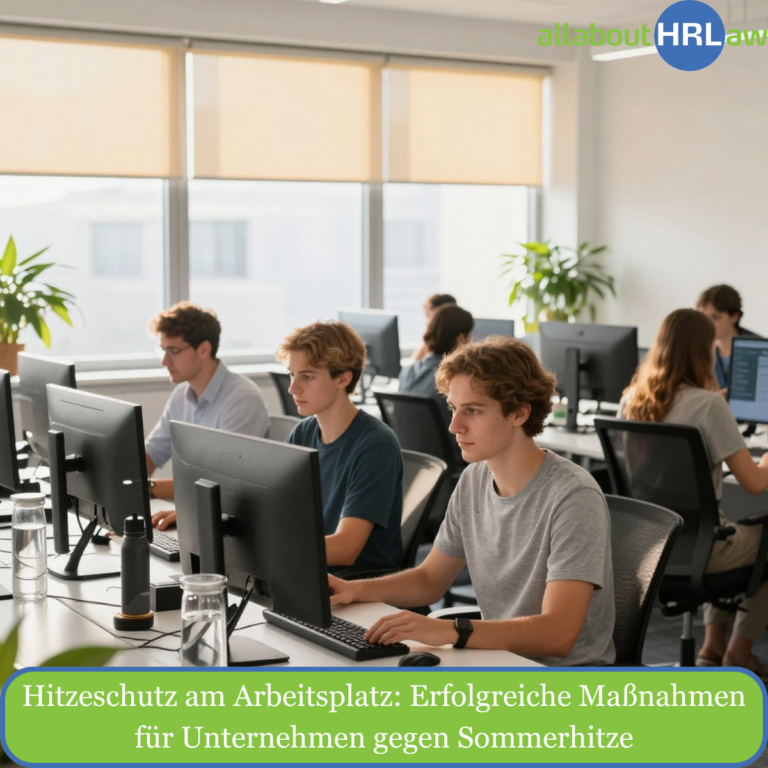
Heat protection in the workplace is becoming increasingly important as summer temperatures continue to rise. While many employees dream of a “heat day” when temperatures soar, employers face a very different challenge: protecting the health of their workforce, complying with legal requirements, and ensuring business operations continue to run smoothly.
For small and medium-sized enterprises (SMEs) and start-ups in particular, it is essential to develop appropriate measures well in advance. High temperatures not only affect employees’ health but can also reduce concentration, productivity, and effective collaboration across the business.
A well-designed workplace heat protection strategy helps minimise health risks, improves employee motivation, and enhances long-term employer attractiveness. Heat protection is therefore not only an occupational health and safety issue but also an integral part of a modern HR strategy.
As your external HR department, we help businesses combine employment law compliance with practical HR solutions while building sustainable, future-ready people processes.
Why Heat Protection in the Workplace Is Becoming Increasingly Important
Hot summers are no longer the exception. Temperatures exceeding 30°C have become a regular occurrence across many parts of Germany. Offices without air conditioning, with large glass façades, or inadequate solar shading can quickly reach uncomfortable and potentially harmful indoor temperatures.
The effects of workplace heat are well documented. As temperatures rise, employees’ concentration, attention span, and overall performance decline, while fatigue, error rates, headaches, and circulatory issues become more common.
For businesses, this means high temperatures can have a direct impact on productivity, work quality, and absenteeism. Smaller organisations, which often rely on a limited number of key employees, particularly benefit from clear policies and proactive planning.
Effective heat protection in the workplace is therefore not only a legal obligation but also an important element of a forward-thinking employer strategy. Companies that take action early create healthier working conditions and demonstrate genuine appreciation for their employees.
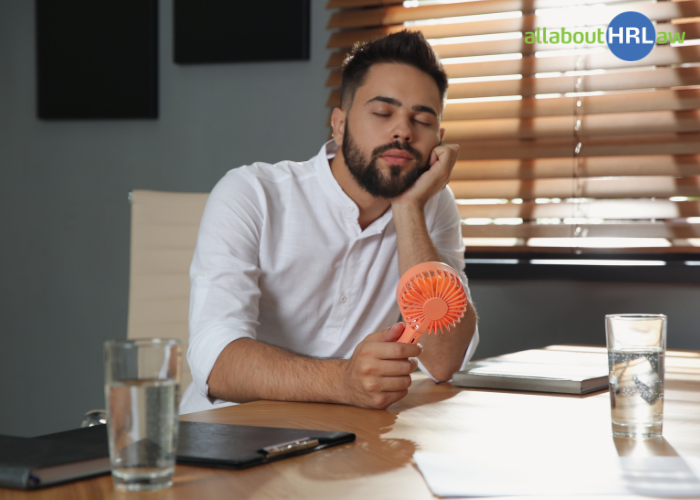
Heat Protection in the Workplace: What Are Employers’ Legal Obligations?
Many employers wonder whether employees are entitled to stop working during periods of extreme heat. The answer is straightforward: under German law, there is no general legal entitlement to a “heat day.”
However, employers do have clear obligations under the German Occupational Health and Safety Act (Arbeitsschutzgesetz) and the Technical Rule for Workplaces ASR A3.5. They are required to ensure that workplaces are designed to minimise health risks wherever possible. This includes assessing which protective measures are necessary and appropriate during periods of high temperatures.
The following guideline temperatures apply:
From 26°C
Once the indoor temperature reaches 26°C, employers should begin assessing suitable measures. These may include effective solar shading, adjusted ventilation practices, or providing employees with sufficient drinking water.
Above 30°C
If the indoor temperature exceeds 30°C, additional protective measures are required to reduce heat exposure and minimise health risks for employees.
Above 35°C
At indoor temperatures above 35°C, a workspace is generally no longer considered suitable unless appropriate technical, organisational, or personal protective measures are in place.
The measures required will depend on factors such as the type of work performed, the workplace environment, and employees’ individual exposure to heat. Particular attention should be given to employees performing physically demanding tasks or those who may be more vulnerable to heat due to personal circumstances.
For this reason, businesses are advised to establish an internal workplace heat protection policy that clearly defines responsibilities, procedures, and protective measures.
Heat Protection in the Workplace: Proven Measures for Employers
Not every company has access to air-conditioned office space. Nevertheless, there are many practical ways to improve working conditions during hot weather.
Organisational measures may include shifting working hours to the cooler morning hours, scheduling meetings early in the day, or allowing additional short recovery breaks. Adjusting workflows can also help avoid physically or mentally demanding tasks during the hottest part of the day.
Technical measures are equally important. These include installing effective external blinds or shades, ventilating buildings during cooler periods of the day, and using fans or air conditioning where feasible. Internal heat sources such as printers or servers should also be reviewed and, where possible, reduced or relocated.
Employees themselves can also contribute to effective heat protection by staying well hydrated, wearing lightweight clothing where company dress codes allow, and taking regular movement breaks.
Successful workplace heat protection always results from a combination of technical, organisational, and personal measures.
Flexible Working Models as a Solution During Summer Heat
The world of work has changed significantly in recent years. Remote work, hybrid working, and flexible working hours have become standard practice in many organisations.
During hot summer days, these models offer significant advantages. Employees can make better use of their most productive working hours while avoiding commuting during the hottest parts of the day.
Practical solutions include earlier start times, flexible break arrangements, or allowing employees to work from home during periods of extreme heat. Hybrid working models and virtual meetings can also help reduce heat-related strain.
It is important that businesses establish clear and transparent policies. SMEs, in particular, benefit when employees understand the available options and the conditions under which they apply.
The benefits for employers are equally significant: higher employee satisfaction, reduced absenteeism, and a stronger employer brand.
How an External HR Department Can Support Businesses During Heatwaves
Many SMEs and start-ups either do not have an in-house HR department or operate with limited HR resources. When new processes need to be introduced or employment law questions arise, organisations often lack the time or specialist expertise required.
As your external HR department, we support businesses by helping them:
- develop legally compliant internal policies,
- advise managers on their employment law responsibilities,
- implement flexible working time models,
- establish legally compliant remote working policies,
- communicate transparently with employees, and
- build sustainable, modern HR processes.
This ensures that workplace heat protection is viewed not simply as a legal obligation but as part of a people-focused company culture.
Professional HR support enables smaller businesses to meet legal requirements while creating attractive and healthy working environments.

Conclusion: Be Well Prepared for Hot Summer Days with Clear Policies
Professional workplace heat protection not only safeguards employees’ health but also improves motivation, productivity, and employer attractiveness.
Businesses that introduce clear policies early and make effective use of flexible working models are well prepared for future periods of extreme heat. This is not simply about responding to individual hot days but about creating sustainable, modern working conditions for the long term.
SMEs and start-ups, in particular, benefit from strategic HR support. As your external HR department, we help you implement employment law requirements with confidence while developing tailored solutions that fit your business.
Looking to build professional, future-proof HR processes? Get in touch—we support your business as your external HR department with tailored HR-as-a-Service solutions.